Secluded Coves & Snorkeling
The most secluded coves on the central Puglia coast are carved into limestone cliffs — mostly inaccessible from land, and included as swim stops on most boat tours.
Most of these spots sit at the base of high limestone cliffs. There is no road or path down — boats are the only practical way to reach them.
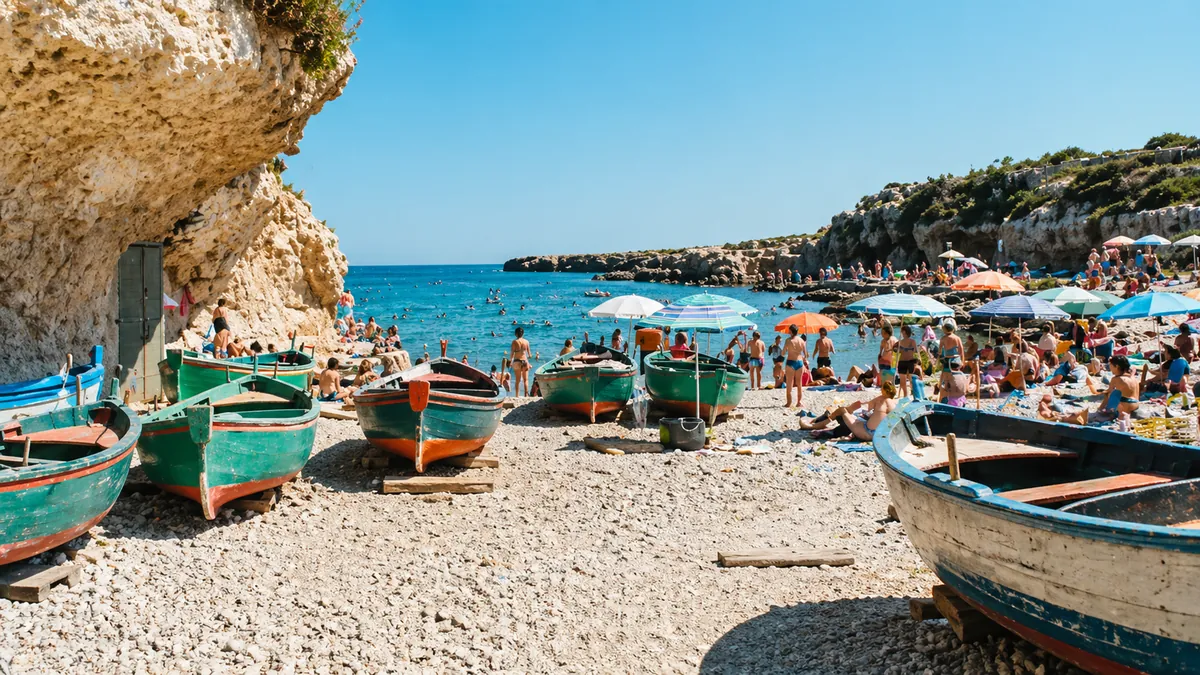
A narrow cove about 2 km north of Polignano town. The water is extremely clear and rarely gets above knee depth at the edges. Small boat tours pass it on the way to the main caves. Not a dedicated swim stop on most group tours, but private charters can anchor here. Snorkeling visibility is typically 8–12 m.
Boat Access Only
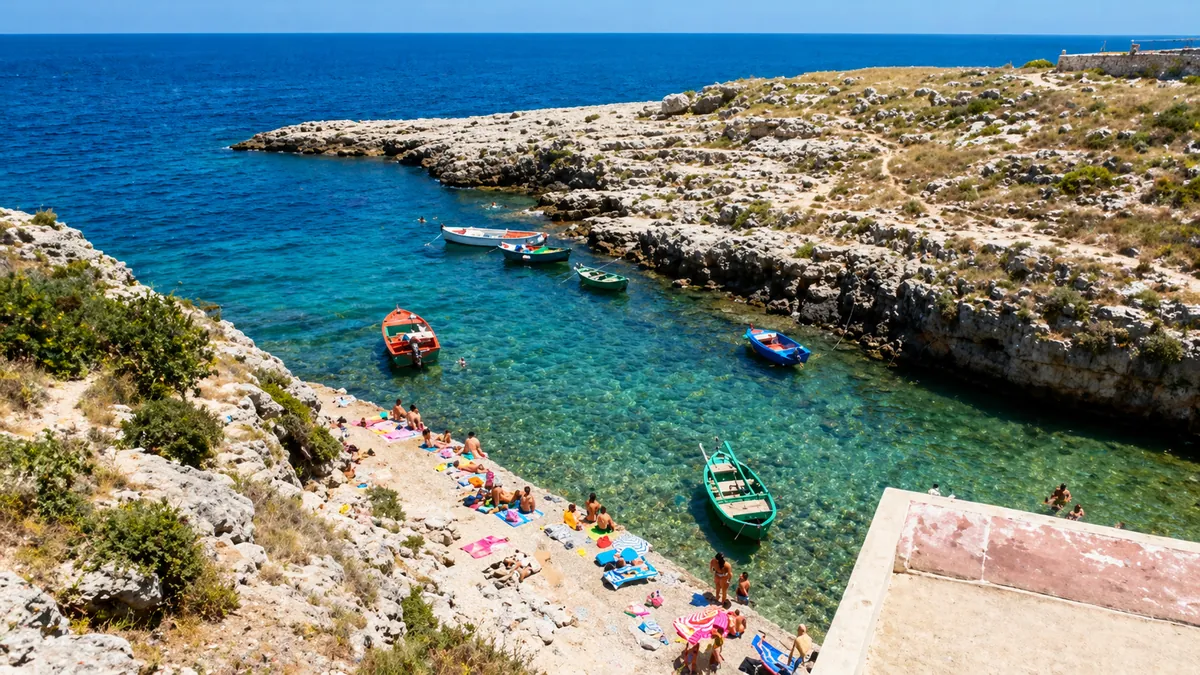
The most-visited swimming cove on the Polignano cave tour route. A sheltered bay with a sandy bottom at the edges and 2–5 m depth in the centre. Water temperature reaches 24–26°C in July and August. Most shared boat tours (both speedboat and wooden gozzo) stop here for 20–30 minutes. The cove is calm even when the open Adriatic has some swell.
Standard Swim Stop
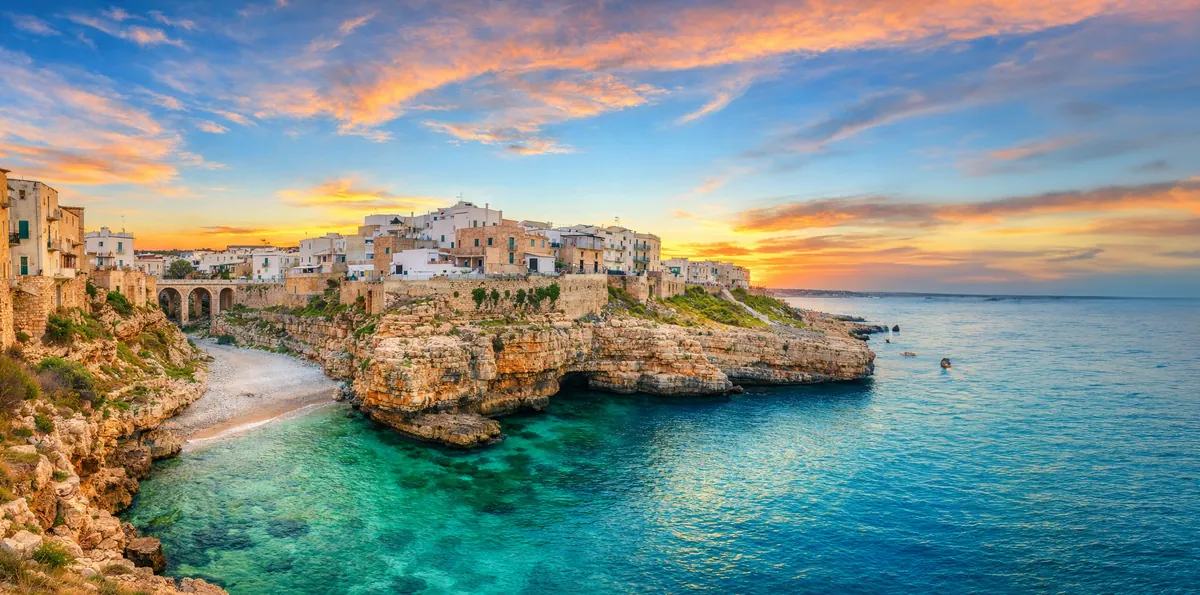
A small pebble cove at the base of the old town cliffs, directly below the Polignano promontory. Accessible on foot via a steep staircase from the town (about 10 minutes down, more strenuous coming back up), but also a stop on some smaller boat tours. The cliff walls rise 20 m above the water, making it the most dramatic of the three. Kayak tours often depart from here.
Foot Access + BoatThe central Puglia coastline has a rocky limestone seabed with good visibility and a range of Mediterranean marine life.
Common in limestone crevices 2–5 m below the surface. Octopus are frequently spotted at Cala Port'Alga between June and September.
The most common fish species in the shallow water around cave entrances and rocky outcrops. Shoals of seabream are visible in 1–3 m of water.
The protected Posidonia oceanica seagrass meadows form the base of the Adriatic ecosystem. They're visible at 3–8 m depth and create a dense underwater landscape. Do not anchor on them.
The limestone formations that create the sea caves continue below water level. Snorkeling near a cave entrance — particularly Cala Port'Alga — reveals the rock continuing several metres down.
Most of these coves don't have road access. The options below cover all budgets.
The easiest option. Most shared cave tours (1.5–2h, €35pp) include a 20–30 minute swim stop at Cala Port'Alga. If you're already planning a cave tour, your swim stop is built in. View cave tours →
The only way to request specific coves. Tell the skipper which spots you want to prioritise. From €290 for a small motor boat (up to 7 guests, 2–4h). Private catamaran from €525 for up to 10 guests. See charter pricing →
Guided kayak tours (€25–35pp, 1.5–2h) launch from Cala Paura and visit coves and cave entrances at water level. The closest you can get to the cliff walls without scuba gear. Kayaking guide →
The only cove on this list with foot access. From the Polignano old town, a signed staircase descends to Cala Paura in about 10 minutes. The return climb takes 15–20 minutes and is steep. No facilities at the bottom. Best visited early morning before it gets crowded.
Sunscreen: Use reef-safe sunscreen at all swim stops. Regular sunscreen washes off and affects the water quality in enclosed coves. Most operators will remind you of this.
Marine life: Do not stand on or touch the seagrass, coral-like formations, or any marine life. The Posidonia seagrass meadows are protected under EU law.
Accessibility: Cala Paura is accessible on foot via stairs (no wheelchair access). All other coves on this list require a boat and are not accessible to wheelchair users. There are no adapted swimming facilities at any of these locations.
Snorkeling gear: Most shared boat tours do not provide snorkeling masks. Bring your own if you want to snorkel at the swim stop. Some private charter operators will provide snorkeling gear on request — check before booking.